Hepatitis B & C: Closing the Diagno...
13 Oct,2026


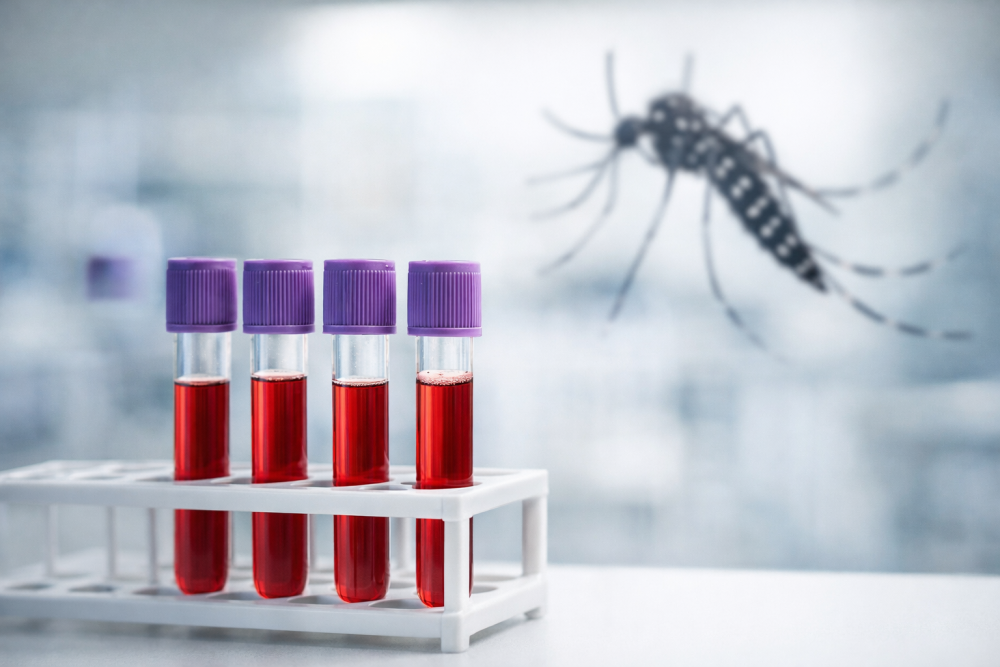
The common Aedes mosquito quietly causes two public health disasters in over 100 countries every year. Two RNA arboviruses that spread by the same bite, dengue virus (DENV) and chikungunya virus (CHIKV). These cause havoc across continents and endanger about half of the world's population that lives in endemic areas.
The four serotypes of the flavivirus dengue (DENV-1 to 4) can cause anything from a minor fever to the potentially fatal dengue haemorrhagic fever and shock syndrome. Chikungunya, an Alphavirus belonging to the Togaviridae family, is well-known for causing crippling polyarthralgia that can last for months and sudden-onset fever. Beyond joints, CHIKV is far more significant than is frequently acknowledged due to its neurological complications, which include encephalopathy, myelitis and documented neonatal transmission. Due to the nearly identical clinical presentations of both viruses, bedside differentiation is practically impossible and co-infection which is increasingly being reported at rates as high as 8% in Indian febrile cohorts is a diagnostic blind spot with grave implications for patient care and outbreak monitoring.
Breaking the Chain: Prevention Before the Bite
Aedes aegypti and Aedes albopictus vectors are shared by DENV and CHIKV, so prevention initiatives that focus on mosquito ecology have a double benefit. Aedes larvae grow in water that remains, which can be found in flower pots, tires, cooler trays, and abandoned containers. The cornerstone is source reduction. Personal protection is given by full-sleeved clothing and insect repellent, particularly during the peak biting hours of dawn and dusk. It is equally important to install window screens, support group disinfection and fogging programs and promptly notify public health authorities of clusters of febrile illnesses. Environmental management measures such as appropriate disposal of solid waste and preventing creation of stagnant water bodies which is the breeding ground of these mosquitos, addresses the structural factors that enable outbreaks to spread. We can prevent transmission by a combination of measures, not a single one.
Precision Diagnostics: The Revolutionary Potential of Molecular Testing
Conventional diagnosis often depends on serological testing and clinical symptoms, both of which are often inadequate. The symptoms in dengue and chikungunya are very similar to those of other fevers such as influenza, Zika and malaria. This can cause misdiagnosis and delays in treatment. When using serological methods which identify antibodies that develop days after infection, the crucial early window where interventions are most effective can be missed.
Molecular diagnostic tools especially real-time reverse transcription PCR (RT-PCR) provides superior performance. Even in cases of co-infection, these assays can distinguish between dengue and chikungunya by directly detecting viral RNA within hours of symptom emergence. Early detection using molecular techniques supports public health surveillance, avoids needless antibiotic use and directs supportive care. RT-PCR is the gold standard for precise, useful diagnosis in both endemic and non-endemic settings because of its high sensitivity and specificity, which reduce false negatives in low-viral-load samples and false positives from cross-reactivity.
TRUPCR® Dengue/Chikungunya Detection Kit: Enabling Precise and Quick Identification
This degree of accuracy is provided in an easy-to-use, one-step real-time RT-PCR format by the TRUPCR® Dengue/Chikungunya Detection. The kit includes an endogenous internal control to track extraction efficiency and PCR inhibition. It is intended for qualitative detection and differentiation of dengue virus (DENV) and chikungunya virus (CHIKV) RNA in serum or plasma (EDTA). For wide genotype coverage across all four dengue serotypes and the three chikungunya genotypes, it has a highly conserved target region.
Clinical performance is strong. With no cross-reactivity against a broad panel of organisms (such as West Nile, HIV, hepatitis viruses, measles, influenza and common bacteria/fungi), analytical sensitivity reaches a limit of detection of 1 copy/µl for both targets. The kit obtained 98.21% sensitivity for dengue, 97.67% for chikungunya and 97.7% specificity in a blinded clinical correlation study of 182 samples compared to a CE-IVD reference method.
Summary, tools like the TRUPCR® Dengue/Chikungunya Detection Kit help clinicians and public health authorities stay ahead of the curve in an era when vector-borne diseases are on the rise. Nowadays, quick and accurate molecular detection is crucial for preventing epidemics and saving lives.
Selected Scientific References

13 Oct,2026

22 Sep,2026
15 Sep,2026
08 Sep,2026
31 Aug,2026
3B BlackBio Biotech India Limited is now 3B BlackBio Dx Limited as a result of amalgamation with it's parent company Kilpest India Limited. 3B BlackBio Dx is a leading Indian company in the field of PCR based Molecular Diagnostic Kits. We offer technical support and training on all our products and are committed to increasing the efficiency of laboratory testing and enhancing patient care.
The Company is ISO 13485:2016 certified, GMP compliant biotech R&D organization.
General enquires: info@3bblackbio.com
Corporate Enquiry:
+91 9691680693,+91 9810562700
Orders: info@3bblackbio.com
Tel: 0755 - 4076518, 4077847

Register now and receive latest product updates and important announcements directly in your inbox